ND Emergency Commission discusses $1.3 million in staff bonuses, but takes no action

BISMARCK, N.D. (North Dakota Monitor) — A proposal to give roughly $1.3 million in bonus pay for 12 Retirement and Investment Office employees took a step forward Tuesday after officials had tabled the matter due to a legal question.
The bonuses are intended to reward the employees for outperforming revenue benchmarks for four of the state’s investment funds.
The State Investment Board originally planned to approve the funding in a November meeting, but delayed taking action after a board member asked whether the board had the legal authority to do so.
While a state law adopted in 2023 permits staff who oversee state investments to receive the performance-based pay, it doesn’t specifically say the Retirement and Investment Office has authorization to provide the bonuses.
“They have the authority for the program, but no specific budgetary authority to make those payments,” Office of Management and Budget Director Joe Morrissette, who sits on the State Investment Board, said at a Tuesday Emergency Commission meeting.
The Attorney General’s Office verbally advised the Retirement and Investment Office that the agency could safely move forward with approving the bonus pay, Retirement and Investment Office Executive Director Jodi Smith said.
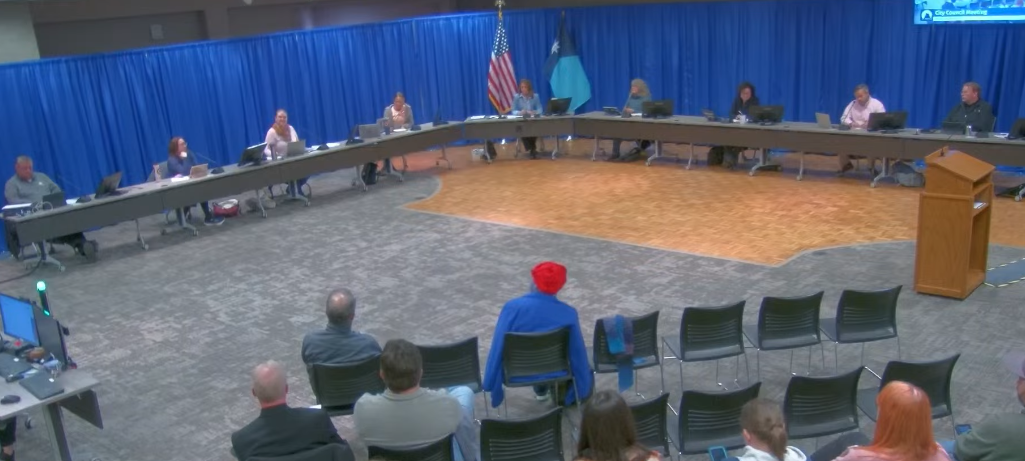
The matter was brought to the Emergency Commission on Tuesday out of an abundance of caution, Smith said. The Emergency Commission, which consists of the governor, legislative leaders and the secretary of state, addresses funding issues that come up between legislative sessions.
Smith rescinded the request after the Emergency Commission ultimately decided that it did not need to take action.
Some commission members signaled interest in amending the statute at a later date to make the agency’s appropriation authority more explicit.
“I think it was written in a way that there was not clarity,” said Gov. Kelly Armstrong, who chairs the Emergency Commission as well as the State Investment Board.
The State Investment Board will vote on the bonuses at its next meeting, which is scheduled for January, according to Sarah Mudder, communication and outreach director for the Retirement and Investment Office.
The Retirement and Investment Office invests state money on behalf of the State Investment Board, some of which is managed by in-house investors. The top four funds are the Legacy Fund, the Public Employees Retirement System, the Teachers Fund for Retirement and Workforce Safety and Insurance.
The agency introduced the bonuses to encourage investment managers and other staff at the Retirement and Investment Office to bring in more money for the state, as well as to improve retention and recruitment. It was added at the same time North Dakota began an initiative to manage more of its investment money in-house.
If approved, this would be the first time the bonuses are awarded. The bonuses are funded by earnings on the agency’s investments. Seven of the bonuses awaiting approval are more than $100,000, with the largest more than $293,000.
For employees to get the bonuses this year, the State Investment Board’s top four funds had to exceed certain earnings benchmarks between July 1, 2024, and June 30, 2025, Smith said previously.
The benchmarks are meant to represent standard market performance, she said. The funds outperformed the benchmarks by more than $191 million.
“$191 million more than the benchmark — that’s a big deal,” House Majority Leader Mike Lefor, R-Dickinson, said during Tuesday’s meeting. “That deserves a pat on the back.”
Armstrong previously expressed reservations about the bonus pay program, which was adopted before he became governor. He said at November’s State Investment Board meeting that he was under the impression the bonuses would be more difficult to obtain.
He reaffirmed those concerns on Tuesday, and said while he doesn’t want to take away pay that was promised to investment staff, the State Investment Board would likely revisit the policy in the future. He said he wasn’t convinced the bonuses would help North Dakota attract employees.
“They don’t care about what their potential bonus is,” Armstrong said. “They care about what the base pay is.”
North Dakota Monitor reporter Mary Steurer can be reached at msteurer@northdakotamonitor.com.