Religious Leaders Discuss Role of A.I. in Faith
The general consensus seems to be that while it could be possible to utilize the technology to spark ideas or help research, the concept of using A.I. to write entire sermons or homilies is antithetical to the notion of faith itself.
FARGO, N.D. (KVRR) – You likely don’t think of what the leader of your chosen faith is doing during services as a book report, but, in many ways, that’s not an inaccurate description.
And if kids are using artificial intelligence to write papers for school, what’s stopping priests from going to ChatGPT for a homily?
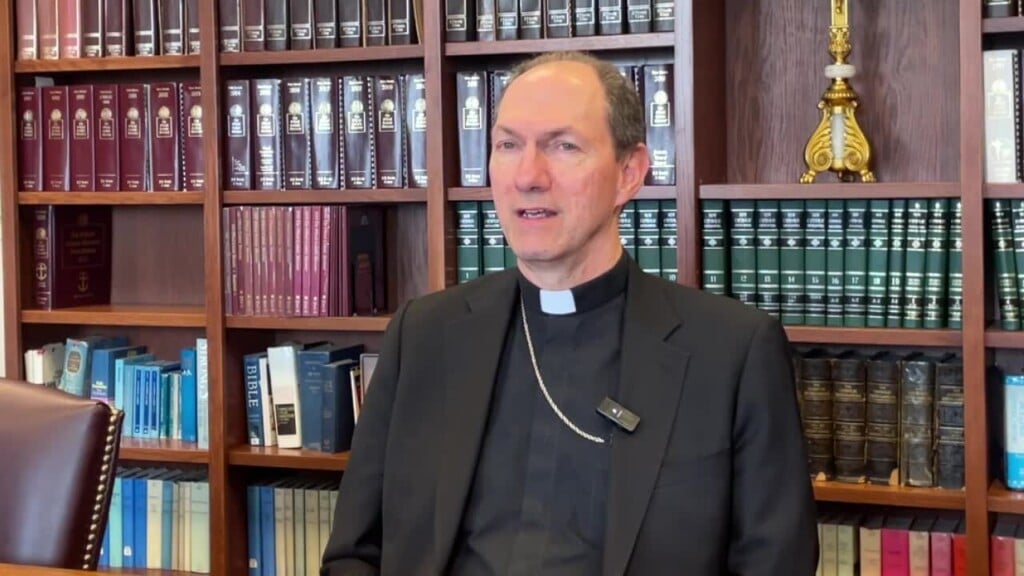
“A homily, for instance, in church, communicates faith. It communicates the message of our faith and the wisdom that’s been handed down to us,” said Bishop John Folda of the Diocese of Fargo. “A.I. doesn’t do that. It can’t do that.”
Folda says he can understand using the technology as a jumping-off point but that wholesale use of A.I. for something as deeply personal as religion is a bridge too far.
“It collects information, it puts information together, but it can never convey the fullness of what we believe and what we’re trying to communicate in our church and our faith,” he said.
He indicated that conversations with fellow religious leaders had led to a similar consensus – and his sentiments were echoed by Pastor Tony Scheving at Fargo Baptist Church.
“I learned in Bible college, this expression – milk a lot of cows, but make your own butter,” he said.
Scheving did say that the church is using A.I. to translate courses for their free online ministry into different languages, but as far as his in-person practice goes, all of his sermons, homilies, and the like, have to come from him in order to feel honest and true to his faith.
“I consult a lot of things, but if the message isn’t primarily in my heart before I stand there to teach it to the congregation, it’s gonna fall flat,” he said.
The Diocese of Fargo also addressed this topic in their March 2025 magazine issue, quoting Pope Francis in saying, “AI should not be seen as an artificial form of human intelligence but as a product of it.”