Virtual reality makes manufacturing more accessible for people with disabilities

BISMRACK, N.D. (North Dakota Monitor) — A new virtual reality room at Bismarck State College is the latest addition to a project to help people with disabilities get manufacturing jobs in North Dakota.
The project is called XR for VR, which stands for “extended reality for vocational rehabilitation.”
It’s a collaboration between Bismarck State College, Fargo virtual reality media company Be More Colorful and nonprofits ND Assistive and CAST.org.
The goal is to make manufacturing more inclusive of people with disabilities.
“We’ve seen talented, capable people steered toward jobs far below their capabilities, earning much less than a living wage often due to incorrect assumptions around perceived limitations,” Be More Colorful co-founder Matthew Chaussee said at a Monday ribbon-cutting for the room.
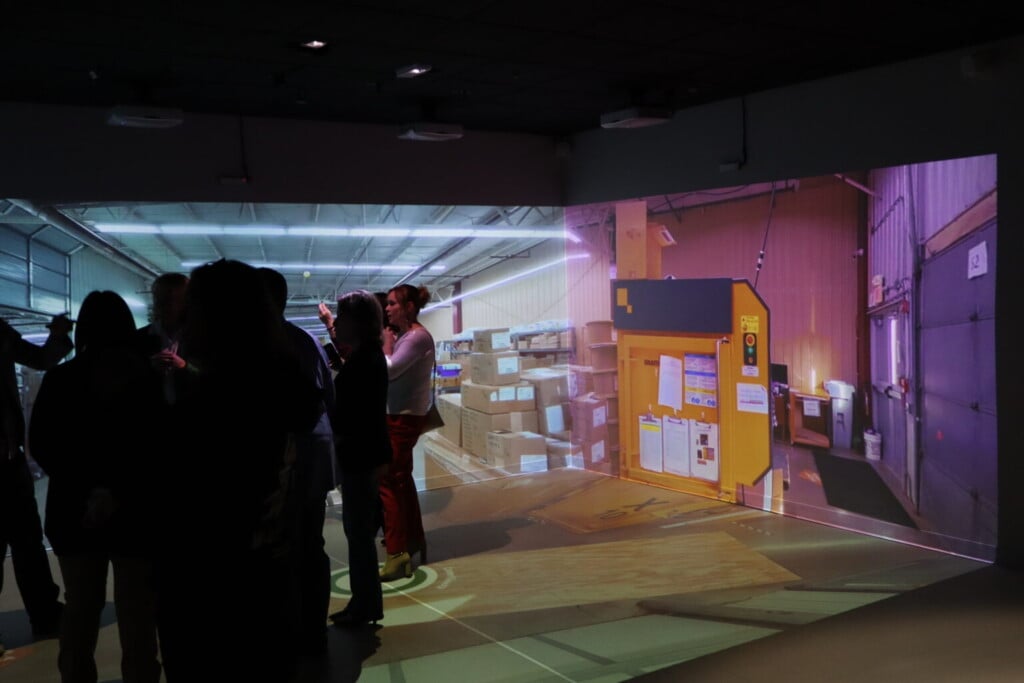
People with disabilities can use the virtual reality technology to view manufacturing facilities and see what working there is like.
“They can learn safety protocols in a controlled environment,” Gov. Kelly Armstrong said at the Monday ceremony. “They can build confidence, develop skills and see themselves in careers they may have never even imagined before.”
While participants can use the program with virtual reality headsets, XR for VR hopes to open nine virtual reality rooms across the state. They work by projecting North Dakota manufacturing workspaces onto the walls and floor — with no headset required.
The latest room opened at Bismarck State College on Monday. Bruce Klootwyk, career coach for the program, said people with all kinds of support needs can participate.
“We go across the spectrum from ADHD to cognitive disabilities,” Klootwyk said.
XR for VR has met with the North Dakota School for the Blind, for example, he said.
“A lot of them can still see a little, and with our technology, we can help them get better jobs,” he said.
Klootwyk, who has cerebral palsy, said assistive technology was virtually non-existent when he was in school. Recent advancements in the field like XR for VR give him hope, he said.
“I think the world is going to become much more inclusive of individuals with disabilities,” he said.

Shannon Coulter, director of the XR for VR project, introduces other members of the initiative during an unveiling of a new virtual reality room at Bismarck State College. To her left is Bruce Klootwyk, Mansi Pagare, Loretta Benedict, Adrianna Aguayo and Don Winter. (Photo by Mary Steurer/North Dakota Monitor)
The project was made possible through a $9.9 million grant from the U.S. Department of Education’s Disability Innovation Fund. The team received the award in 2024.
About a hundred people have tried out the product so far, Klootwyk said. Of those, 10 have gone on to find jobs in manufacturing, he said.
Klootwyk said the team’s goal is to have 400 people with disabilities participate over five years.
The team also wants to one day use the technology to simulate working in other industries, like health care, he added.
Those interested in trying the room can fill out a form on the program’s website.XR for VR also welcomes manufacturing companies who want to have their facilities filmed for the project to get in touch.
North Dakota Monitor reporter Mary Steurer can be reached at msteurer@northdakotamonitor.com