People are betting $1.2M on whether federal agents in Minneapolis shootings will be charged
ST. PAUL, Minn. (Minnesota Reformer) — Jonathan Ross getting charged for killing Renee Good before the end of the month is a less likely event than Jesus Christ’s return before the end of the year, according to people betting on the prediction market Polymarket.
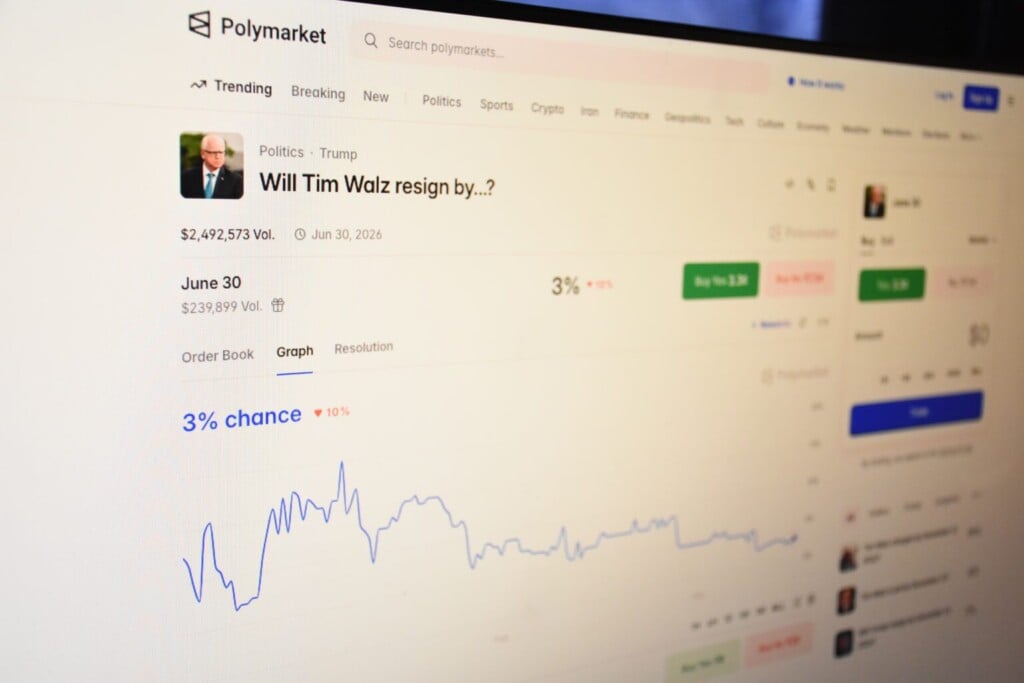
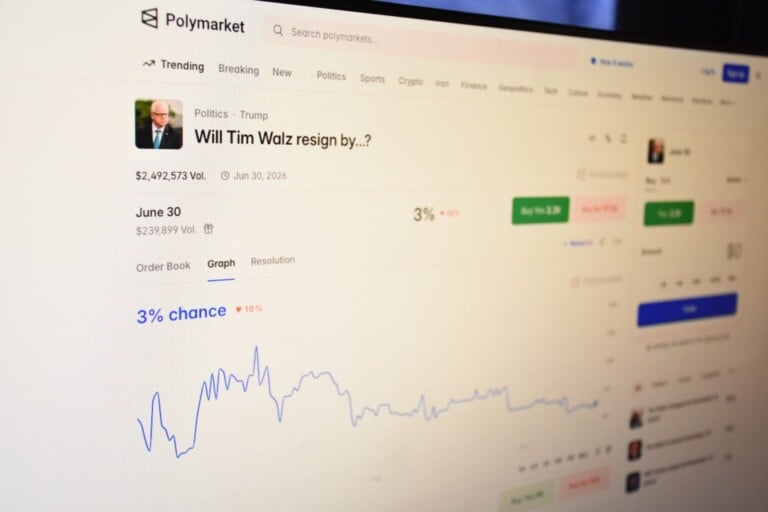
Prediction markets, which have soared in popularity since 2024, allow people to bet on almost anything. Under the category “Minnesota Unrest” on Polymarket, for example, over $2 million has been wagered on whether Gov. Tim Walz or U.S. Rep. Ilhan Omar will resign, and over $1.2 million has been bet on whether the federal immigration enforcement agents who shot and killed two U.S. citizens in January will be charged before the end of the month.
Bipartisan lawmakers in the Minnesota Senate introduced a bill Tuesday that would ban prediction markets, joining state officials across the country attempting to regulate the platforms and clashing with the Trump administration in their efforts.
Kalshi, a prediction market platform valued at $11 billion, is available in all 50 states, even in Utah and Hawaii, which have outright bans on gambling. It’s also available in Minnesota and eight other states that allow some form of gambling but ban sports betting, even though most activity on the platform revolves around sports. Cryptocurrency-based Polymarket, valued at $12 billion, is making a comeback in the United States, newly free to operate under the more permissive Trump administration after the company ran afoul of federal regulators in 2022 under the Biden administration.
The platforms are able to get around sports betting restrictions, which fall under state control since a 2018 Supreme Court decision, by selling bets as financial contracts tied to the outcome of events, known as event contracts. They say that prediction markets are similar to commodity markets that speculate on the future price of corn or oil — not outright gambling — though Kalshi has advertised itself as the “first app for legal sports betting in all 50 states.”
Sen. John Marty, DFL-Roseville, the main author of the bill that would ban prediction markets (SF4511), said that the bill has strong bipartisan support and a good chance of passing, especially since it draws supporters from both sides of Minnesota’s sports betting legalization debate — neither side wants prediction markets to circumvent state regulations on sports betting.
Sen. Matt Klein, DFL-Mendota Heights, who led an effort last year to legalize sports betting against a more restrictive Marty plan, is an author on the new bill to ban prediction markets. Klein is a candidate for Congress in the 2nd District.
Legalizing conventional sports betting is on the table again this year (HF4204/SF4139), and the lead author of the Senate bill, Nick Frentz, DFL-North Mankato, said he’s asking senators to consider legalizing and regulating: “Sports betting is essentially going on, unregulated in Minnesota” in the form of prediction markets, and “we feel it would be safer to regulate it.” Frentz, for his part, said that he thinks legislators “have to make changes that limit prediction markets,” but, as an advocate for sports betting, doesn’t mind “Minnesotans betting $5 predicting that the Vikings win by a touchdown.”
Opposition to a Minnesota prediction market ban will be fiercest from the platforms and the federal government — specifically, the Commodity Futures Trading Commission, the federal agency that oversees derivative markets, which has been friendlier to prediction markets under the Trump administration. (Donald Trump Jr., President Donald Trump’s eldest son, is an adviser to both Polymarket and Kalshi.)
Prediction market platforms and several states have already been facing off in court: In at least eight lawsuits, state gambling commissions and tribal governments have accused Kalshi of operating an unlicensed sports gambling platform, NPR reported. In six lawsuits, Kalshi has sued state regulators for trying to regulate the platform. Action Network, a sports media company, reported that court rulings on prediction markets have been mixed, making appellate decisions in April and May especially consequential.
In February, the Commodity Futures Trading Commission underscored its authority to regulate the event contracts facilitated by prediction market platforms.
“To anyone seeking to challenge the Commission’s authority over these contracts, I want to make it clear: we’ll see you in court,” Mike Selig, the chair and only member of the commission, posted on X at the time regarding the federal-state dispute. The commission has begun the process of making new rules around prediction markets and published a notice for public comment last week.
Marty said that he believes prediction markets are facilitating bets, which fall under state regulatory powers, though ultimately the courts will test that argument.
“We’re not going to regulate commodities, we’re not going to regulate securities,” Marty said. “But we are going to say: If you’re using this as a form of betting, you’re not allowed to bet in Minnesota on those things,” outside of private social bets.
The introduced bill lists six prohibited categories of bets, including bets related to sports, politics and catastrophes, and restricts advertising related to prohibited bets.
Well-timed bets on prediction market platforms have raised concerns about insider trading, like when an anonymous person made more than $400,000 betting on the downfall of Venezuelan President Nicolás Maduro, with a final bet made shortly before President Donald Trump ordered the military to strike. These incidents have led U.S. lawmakers, including U.S. Sen. Amy Klobuchar, to introduce legislation banning the president, vice president and members of Congress from buying or selling prediction market bets.
Bipartisan lawmakers in the Minnesota Legislature also introduced a bill (HF4110/SF4474), led by Sen. Jordan Rasmusson, R-Fergus Falls, to ban online sweepstakes games that simulate gambling using “dual-currency” systems where players buy virtual currency with real money for the chance to win real money. Minnesota Attorney General Keith Ellison previously sent letters to sweepstakes casino websites directing them to stop offering online gambling in the state.
As for charges against Ross, Hennepin County Attorney Mary Moriarty said in February that her office was “in good shape” to make decisions on whether to bring criminal charges against him, though bettors on Polymarket are giving it a 2% chance that Ross is charged before the end of the month.