Farm group seeks policy change to help build fertilizer storage
BISMARCK, N.D. (North Dakota Monitor) — Farmers have been hit by spiking fertilizer and fuel prices as the U.S.-Israeli war with Iran disrupts global trade and supplies, but a North Dakota ag group is trying to work on a long-term solution to fertilizer shortages.
The North Dakota Grain Growers Association is urging federal policymakers to change the rules of a loan program that helps farmers with grain storage. The group wants to expand the program to cover on-farm fertilizer storage.
Ed Kessel, past president of the group, said it’s important to have access to fertilizer when it is really needed. More on-farm storage would help guarantee that fertilizer is applied when the crop can use it most efficiently, he said.
Kessel said global demand for fertilizer is outpacing supply, but simply increasing production doesn’t necessarily solve the problem, he said.
He said fertilizer producers and retailers have some storage capacity, but not enough.
“If we did produce more fertilizer, where would we put it?” Kessel said. “So our feeling was it doesn’t do a lot of good to have an increase in production if we can’t store it.”
The program change would help farmers pay for on-farm storage through low-interest loans.
The Farm Storage Facility Loan program is administered by the U.S. Department of Agriculture Farm Service Agency.
Kessel said he would like to see the program expanded for fertilizer as part of the next farm bill rather than a separate legislation. But, “the farm bill is not moving anywhere fast,” he said.
Kessel was part of a delegation to Washington, D.C., in February lobbying for the change, which will require congressional approval, he said.
North Dakota Agriculture Commissioner Doug Goehring said the idea makes sense, especially given that fertilizer requires some specialized storage features that also add expense. He said the potential costs saved on fertilizer would likely justify the cost of the storage and the interest on the loan
“You’re going to be paying more, but what a value that would be,” Goehring said. “You have the ability to lay some (fertilizer) in when the price is reasonable.”
Global demand for fertilizer has increased, but farm equipment and operations also have gotten more efficient. With farmers covering more acres at a faster pace, fertilizer supplies need to be replaced more quickly, Kessel said.
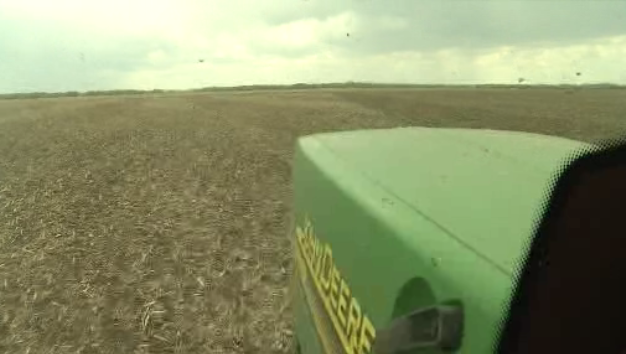
Kessel, who farms near Belfield, west of Dickinson, said he fertilizes as he plants. He said it used to take him all day to plant about 90 acres. Now he can plant 90 acres in a couple of hours.
If the fertilizer runs out, he will park the planter, he said.
North Dakota, with the nation’s only state-owned bank, has developed its own ag loan programs in the last year as farmers have had to deal with natural disasters and a weak farm economy.
Kessel said he has considered a North Dakota program, but said it is really a national issue.
“So it would be one thing to get it done here, but I think ideally something that would be put into place for all farmers,” he said.
It takes a lot of energy to produce chemical fertilizers. Basin Electric Power Cooperative produces fertilizer at its Dakota Gasification Plant near Beulah, but North Dakota is an importer of fertilizer.
The energy-rich Middle East is a prime area of production. But the U.S.-Israeli war with Iran and the disruption in shipping with closing the Strait of Hormuz in the Persian Gulf has helped drive up the cost of fuel and fertilizer.
Josh Linville is the vice president and fertilizer expert for the StoneX Group, a financial services company.
Linville, in a report issued Monday, a day before a two-week cease-fire in the war was announced, said that even if the war ended quickly, it may be too late to help U.S. farmers this year. It takes a month for a ship to go from the Persian Gulf to North America and weeks more to get the fertilizer supplies to the farmers.
“It will take weeks or months to get back to normal,” Linville said.
Those same shipping disruptions also have affected fuel prices.
Kessel said he has already paid for about 90% of the fertilizer he will need this year but only about half the fuel he will need.
Tractors and trucks burn diesel fuel, which is even more expensive than gasoline. Diesel was at $4.84 a gallon in North Dakota on Wednesday, according to AAA.
He said he is already seeing shipping costs increase for supplies he needs at the farm, such as equipment parts. He said high fuel prices will make it more expensive to get his crops to market, too.
“That’s a bigger concern, actually,” Kessel said. “Fuel has a trickle-down effect on it.”
Reach North Dakota Monitor deputy editor Jeff Beach at jbeach@northdakotamonitor.com.