Committee advances security measures for North Dakota lawmakers facing ‘a different world’
BISMARCK, N.D. (North Dakota Monitor) — The North Dakota Legislature is taking steps to improve security for its members, including removing requirements in state law for home addresses to be publicly disclosed and initiating security training for all lawmakers.
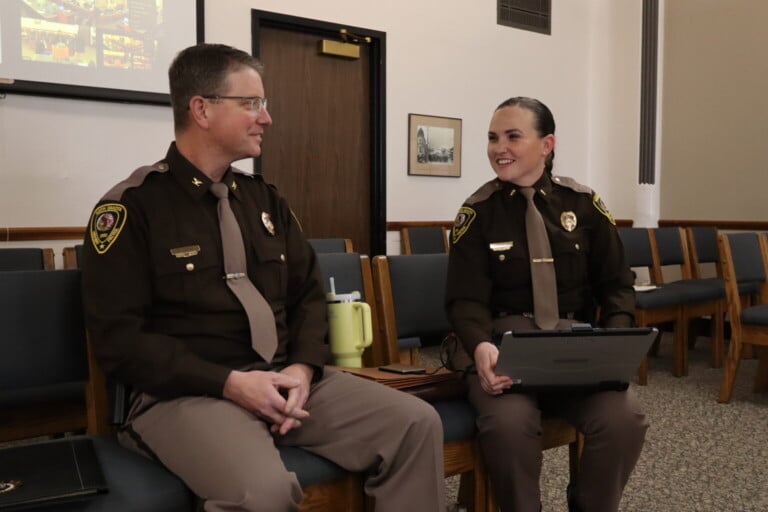
Lawmakers on Thursday directed legislative staff to prepare a memo describing how both initiatives can be accomplished following a confidential security briefing from the North Dakota Highway Patrol.
“We live in a different world than we lived in 10 years ago,” said Sen. Kathy Hogan, D-Fargo, during a discussion following the confidential briefing.
The briefing, which presented a threat assessment of the Capitol complex and guidance to legislators who receive threats, prompted both concerns and shrugs from some lawmakers.
Reps. Robin Weisz, R-Hurdsfield, and Anna Novak, R-Hazen, live in rural communities. They said there is a limit to the security precautions they can take when most of their community can recognize their vehicles or homes on sight.
“The reality is, especially for those of us in rural areas, everybody knows where we live,” Weisz said. “It’s not like you can have any security sitting out on your farmstead.”
At the same time, they said they appreciated the briefing from law enforcement, which was prompted in part by the shootings of two Minnesota lawmakers last June. Minnesota House Speaker Melissa Hortman, and her husband Mark, were killed in their Brooklyn Park home.
“She was attacked in her home,” Novak said. “That’s the scary part. But I live in a small town, very much pro Second Amendment, and so I feel pretty safe because of that.”
Minnesota Sen. John Hoffman and his wife, Yvette, were also wounded in a shooting at their home, and investigators found a list of other Democratic lawmakers in the vehicle of Vance Boelter, who has been charged with the crimes.
The Highway Patrol did not make any policy recommendations during the confidential session, but the information prompted two proposals from lawmakers.
In addition to the security training sessions for all legislators and staff at the start of every legislative session, there was also a lot of concern that state law requires lawmakers to include their home addresses on several filings that executive branch agencies are in turn required to make available to the public.
“They are required to disclose our home address,” said. Rep. Kristin Roers, R-Fargo. “We need to think about where else in code, where else on the web, are we disclosing addresses?”
The committee directed Legislative Council to prepare a list of places in state law that need to be amended in order to change that. John Bjornson, director of Legislative Council, encouraged legislators to begin using post office boxes when they have to provide contact information.

Maria Rosa Nieves, a member of Capitol Security under the North Dakota Highway Patrol, screens a visitor at the public entrance to the Capitol on Aug. 13, 2025. North Dakota legislators are discussing ways to enhance lawmaker security. (Photo by Michael Achterling/North Dakota Monitor)
The Capitol threat assessment identifies potential vulnerabilities in the building and will not be disclosed to the public. Weisz said the Highway Patrol may ask for additional funding for security during the next regular legislative session but no specifics of the threat assessment were provided. North Dakota installed metal detectors at the public entrance of the Capitol in 2017, a response to Dakota Access Pipeline protests, which also included some demonstrations in Bismarck. The security measure was made permanent after that legislative session.
While there has not been a notable long-term increase in threats reported by lawmakers to the Highway Patrol, North Dakota is not insulated against potential threats crossing state lines, Lt. Jenna Clawson Huibregtse said.
“North Dakota isn’t immune from people coming from other states as well,” Clawson Huibregtse said. “Threats that come in to political officials aren’t necessarily always people that are from North Dakota.”
Weisz is one of the lawmakers who has received multiple threats against himself and his family over time. It’s not pleasant, but there isn’t much he can do but take common sense precautions, Weisz said.
“I’m not gonna live my life in fear,” he said.
Security costs
Personal security, especially while at home, has been a prominent concern among lawmakers since the Minnesota attacks. Legislative Council removed legislators’ home addresses from the website shortly afterwards.
Yet while the Highway Patrol provides security at the Capitol complex and can provide assistance at official events elsewhere in the state, there are few options for legislators who desire more protection in their districts or at their homes. The Highway Patrol, authorized to employ 171 officers, does not have the staffing to provide regular assistance to all 141 state lawmakers.
The North Dakota Ethics Commission, a few weeks after the shooting in the neighboring state, issued an advisory opinion interpreting state law as allowing campaign funds to be used on security expenditures in certain situations. Attorney General Drew Wrigley overruled that in a legal opinion of his own late last year, declaring the advisory opinion void.
Some states like Minnesota offer stipends to lawmakers for security costs. North Dakota is not one of them. But the National Conference of State Legislatures is planning to launch a new $1.5 million Security Fund next month that may fill some of the gap.
Bryan Thomas, chief communications officer, said every state legislature will receive funding based on its membership count. The legislatures will have the flexibility to spend the dollars as they see fit, whether on group training sessions or stipends to individuals for small purchases like doorbell cameras, as long as it is broadly available and not limited to a select few lawmakers.
“There’ll be really flexible dollars that legislatures will have access to, to support their members to help a little bit in their security for themselves and their families,” Thomas said.
He said there is sufficient funding to provide an average of $200 per legislator across the country. That’s far less than stipends offered by some states, such as Minnesota, which provides a stipend up to $4,500 for home security. But if the program is successful and the organization can identify additional funding, it could continue in future years.
“$200 doesn’t go a long way, but it certainly helps,” Thomas said.
North Dakota Monitor reporter Jacob Orledge can be reached at jorledge@northdakotamonitor.com.