Lawsuit accuses North Dakota lawmakers of violating constitution with term limits ballot measure
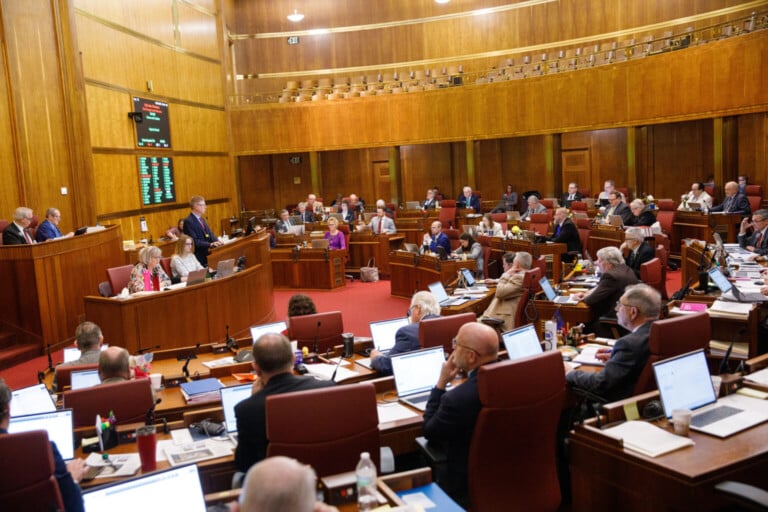
BISMARCK, N.D. (North Dakota Monitor) — A ballot measure that would change voter-approved legislative term limits faces a challenge before the North Dakota Supreme Court.
In a lawsuit filed last week, former Minot lawmaker Sen. Oley Larsen and Grand Forks County commissioner Terry Bjerke claim the Legislature violated the state constitution by creating the measure.
Under an amendment passed by voters in 2022, state lawmakers can serve no more than eight years in the House and eight years in the Senate.
Last year, the statehouse narrowly approved Senate Resolution 4008, which aims to give lawmakers more freedom over how they spend their terms. The resolution creates a ballot measure to allow lawmakers to serve up to 16 years in either chamber. It would also make it so partial terms don’t count against term limits.
The measure will appear on the November election ballot, according to the Secretary of State’s website.
Both Bjerke and Larsen were members of the sponsoring committee to put the term limits amendment on the ballot, according to the lawsuit. The ballot measure passed with 63% approval from voters.
In the lawsuit, filed with the North Dakota Supreme Court, Larsen and Bjerke argue that the resolution violates powers reserved for the public in the state constitution and should not be allowed to go to the ballot. The lawsuit names both the Legislature and the North Dakota Secretary of State’s Office as defendants.
The 2022 constitutional amendment, Article XV, mandates that the Legislature “shall not have authority to propose an amendment to this constitution to alter or repeal” the term limits it establishes.
Larsen and Bjerke state in the suit that regardless of that provision, another section of the constitution under Article III says that the Legislature must reach a two-thirds majority vote in each chamber to change constitutional amendments within seven years of their effective dates. Senate Resolution 4008 did not meet this threshold, the plaintiffs claim, since it passed the Senate by a 24-23 vote and the House by a vote of 53-39.
If the high court doesn’t act, “an obviously unconstitutional ballot measure will be before the North Dakota electors in November — wasting taxpayer dollars on a plainly unconstitutional referendum,” they write.
An attorney for the plaintiffs, Jesse Walstad, did not return a call seeking comment on Monday.
Lawmakers who supported the resolution have said the Legislature’s ability to put constitutional amendments on the election ballot is protected elsewhere in the constitution. Article IV states that the House and Senate only need to clear a simple majority to refer constitutional measures to the ballot.
“The constitution already says that the Legislature can recommend amendments to the constitution through legislative action,” said Sen. Michael Dwyer, R-Bismarck, the primary sponsor of Senate Resolution 4008.
Legislative Council Director John Bjornson said the Legislature has always taken the position that the two-thirds requirement in Article III doesn’t apply to resolutions.
“The resolution isn’t amending or repealing anything, it’s simply placing on the ballot a measure for the people to have the opportunity to do so,” he said.
Rep. Austen Schauer, R-West Fargo, in testimony on the House floor in April acknowledged that the resolution would likely be challenged in court, but that a lawsuit could help make sense of the conflicting language in the constitution.
“This bill may be useful in terms of having the North Dakota Supreme Court step in and decide if it is constitutional or unconstitutional to limit legislative authority,” he said.
Secretary of State Michael Howe said that while he’s not surprised the resolution is being challenged in court, his agency had a duty to approve the proposal for the ballot. He said state law and previous North Dakota Supreme Court rulings indicate it isn’t the role of his agency to determine whether or not a ballot measure is constitutional.
“We’re just required to perform the certification regardless of the content,” he said.
The Legislature and Secretary of State’s Office have yet to file a response in the suit.
Legislative Management will meet Tuesday to discuss the case.
Bjerke and Larsen in the lawsuit say the case should immediately be heard by the Supreme Court because ballot measures to change the constitution are of “substantial public importance,” because the Supreme Court has a responsibility to settle questions about the Legislature’s constitutional powers and because the general election is quickly approaching.
North Dakota Monitor reporter Mary Steurer can be reached at msteurer@northdakotamonitor.com.