North Dakota to offer state employees early retirement in face of declining revenues
BISMARCK, N.D. (North Dakota Monitor) — Some North Dakota state employees will be offered early retirement incentives as the state tries to adjust to declining revenues, driven in part by low oil prices.
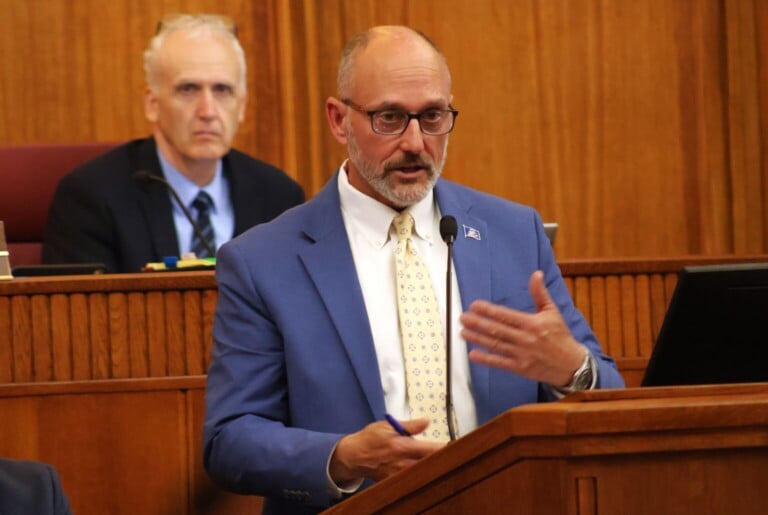
Joe Morrissette, director of the North Dakota Office of Management and Budget, said state agencies have been notified of the plan and have until Friday to opt in.
State employees should be notified by Tuesday if they are eligible for early retirement, he said. Eligible employees will be offered three months of wages and benefits.
If employees opt in, the agency will have to show there would be a savings by leaving the position open at least temporarily or filling the position with an employee who will be paid less.
Morrissette said agencies are being offered the early retirement incentive now because those departments will start working on budgets in April.
The early retirement incentive does not apply to K-12 schools or colleges and universities, but could include the North Dakota University System office or the Department of Public Instruction, if those agencies choose to opt in, Morrissette said.
Morrissette said Gov. Kelly Armstrong approved the incentive plan. The incentives are similar to two rounds of voluntary buyouts during Doug Burgum’s eight years as governor when oil prices dropped significantly, Morrissette said.
The state relies heavily on oil and gas taxes. Oil prices have declined in recent months though oil production has remained mostly steady.
Sales taxes usually mirror oil and gas taxes, Morrissette said.
In addition, North Dakota is projected to collect about $130 million less in individual and corporate income taxes due to changes in the One Big Beautiful Bill Act.
Morrisette said the state is preparing for tax revenue to dip below projections for the rest of the 2025-2027 biennium.
Even if revenue stays at projected levels, state legislators are expected to have less money to spend for the 2027-29 budget cycle than they had to work with for the current biennium.
Morrissette said that is because revenue exceeded projections leading up to the 2025 legislative session.
The state had about $1.3 billion in its general fund balance going into the current budget cycle, he said. Morrissette said some of that $1.3 billion was used for ongoing expenses, rather than one-time expenses.
By comparison, the state is projected to have less than $300 million in the general fund at the end of June 2027, according to Allen Knudson, legislative budget analyst.
“The challenge coming ahead of us is how we reduce ongoing expenditures, not because our revenues are declining or our forecast is way off the mark, because we’ve overspent in the past, and we’ll have to make some adjustments there, because we just won’t have that kind of a big starting balance,” Morrissette said.
The state is working on an updated revenue forecast that should be ready in late March.
Morrissette said he does not expect the state to project a budget deficit. If that were to happen, it could trigger across-the-board cuts known as an allotment.
“I do not expect that to be the case,” Morrissette said.
The state also has a rainy day fund known as the Budget Stabilization Fund. That has a balance of about $938 million, Morrissette said.
Nick Archuleta, president of North Dakota United, which represents state employees, said the state should be cautious given the tight labor market that has meant some positions have gone unfilled.
“We already have fewer public employees doing more work than ever,” Archuleta said.
State agency budget proposals are due July 15, though extensions are sometimes granted if there are questions about federal funding or other revenue streams.
Morrissette said there is no set goal for budget savings yet.
Monitor Editor Amy Dalrymple contributed to this report. Reach Deputy Editor Jeff Beach at jbeach@northdakotamonitor.com