Federal election bill not expected to affect North Dakota
BISMARCK, N.D. (North Dakota Monitor) — A federal election security bill gaining traction in Congress wouldn’t affect North Dakota if it passes, according to the North Dakota Secretary of State’s Office.
The SAVE America Act, as currently written, would require every American voter to provide proof of citizenship when they register to vote. Voters would also have to present valid photo ID when they vote in federal elections.
Additionally, the bill would also require voters to fill out an application to vote by mail and direct states to regularly audit their voter rolls for noncitizens, among other mandates.
The proposal includes an exemption for North Dakota, the only state that doesn’t have voter registration, said Deputy Secretary of State Sandy McMerty.
The exemption would require North Dakota to “have a system for confirming citizenship and passing this information onto election officials,” which the state already has in place, McMerty said.
U.S. Rep. Julie Fedorchak, R-N.D., worked with bill sponsor Rep. Chip Roy, R-Texas, to exempt North Dakota from the bill, said Ty Kennedy, a staffer in Fedorchak’s office.
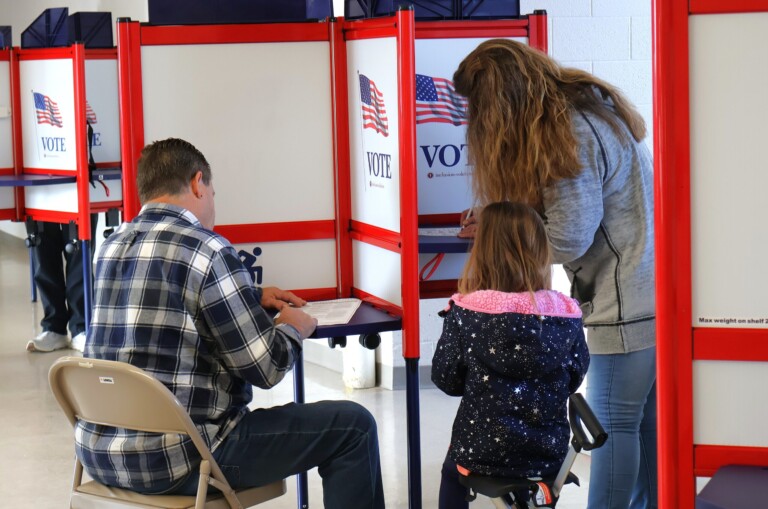
North Dakota already makes voters apply for mail-in ballots. The state also already requires voters to show valid identification each time they vote, though people also cannot be turned away if they show up without an ID. In that scenario, voters’ ballots are set aside until their identities can be verified.
Valid forms of identification include a North Dakota driver’s license; a non-driver state-issued identification card; a tribal ID or a tribal letter; or a certificate from a long-term care facility.
The SAVE America Act is scheduled to go before the House floor for a vote this week.
The proposal builds on the Safeguard American Voter Eligibility (SAVE) Act of 2025, which passed in the House last spring.
North Dakota Republican Sens. Kevin Cramer and John Hoeven co-sponsored a version of the bill introduced in the Senate in early 2025.
Cramer in a statement to the North Dakota Monitor said that while he’s usually against “federalizing state functions,” he supports the SAVE Act “because it balances and reinforces existing laws to ensure elections are beyond reproach.”
McMerty said the North Dakota Secretary of State’s Office is also watching another, more restrictive federal election security bill in the U.S. House of Representatives, the Make Elections Great Again Act.
That bill does not include an exemption for states that don’t register voters.
Critics of the bills say the proposals would make voting more difficult for some voters.
The League of Women Voters, for example, cautions that the legislation could burden groups like military voters, married women who changed their last names and citizens of color, and would be redundant to existing federal law.
“What we’re against is anything, any attempt to make our voting more complicated, more difficult, to suppress voters, disrupt the voting process or to undermine any public confidence in our voting system,” Kathy Tweeten, president of the League of Women Voters of North Dakota, said.
The MEGA Act has only been introduced in the House. Fedorchak is not a cosponsor of the legislation.
The bills come as President Donald Trump’s administration pushes for more federal control over elections. Under Article I of the U.S. Constitution, elections are primarily regulated by states.
Those efforts include suing numerous states for not providing voter registration lists, which the executive branch says it needs to search for noncitizen voters.
McMerty said that while the Secretary of State’s Office has discussed the state’s voter management processes with the U.S. Department of Justice, the executive branch has not asked for any North Dakota voter data.
When asked what the Secretary of State’s Office thinks about the White House’s efforts to increase federal oversight of elections, McMerty said Howe believes North Dakota has “some of the best election integrity laws in the country.”
Noncitizen voting is rare and prohibited under federal law. A 2017 study by the Brennan Center for Justice at New York University that analyzed voting in 42 U.S. jurisdictions in the 2016 election found about 30 incidents of voting by noncitizens out of roughly 23.5 million votes.
North Dakota Monitor reporter Mary Steurer can be reached at msteurer@northdakotamonitor.com.