Property taxes eliminated for 50,000 North Dakota households under new legislation
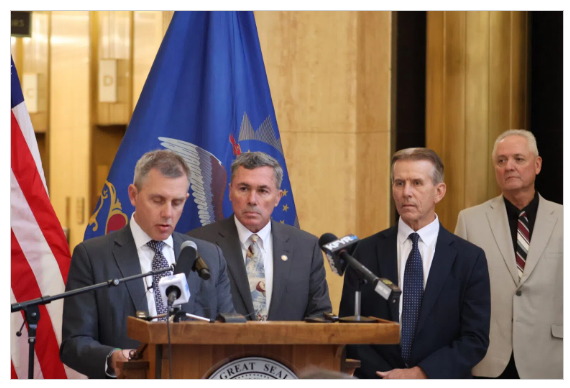
This year’s Primary Residence Credit program offers up to $1,600 per household in property tax relief for tax years 2025 and 2026, up from $500 per household offered in 2024. That zeroed out property taxes completely for about 30% of eligible households, Gov. Kelly Armstrong said in a press conference last week.
“We know the legislation isn’t perfect, and there will be minor tweaks that are needed, but the impact is clear and unmistakable,” Armstrong said during the press conference.
The expanded subsidies were passed by the Legislature earlier this year as part of a property tax relief package, which at the time was estimated to cost $473 million. That bill also increased funding for a disabled veterans tax credit and a renters refund.
Rep. Mike Nathe, R-Bismarck, said he hopes the program makes home ownership more affordable to first-time buyers.
“This may be the difference between buying a house and maybe renting,” Nathe, who sponsored the property tax relief package during the 2025 session, said.
In a random sample of 50 property tax statements across 15 counties, the state found the household had its property taxes reduced by 46%.
The Office of State Tax Commissioner received 145,000 applications for the credit for the 2025 tax year, which represented about 95% of eligible households.
The primary residence tax credit is paid for with earnings off the state Legacy Fund, so local governments don’t lose out on any tax revenue due to the program. The Legacy Fund, recently valued at $13 billion, invests a portion of the state’s oil and gas taxes.
The legislation also limits the amount local governments can raise property taxes each year at 3%. If a local government doesn’t use the full 3%, officials can tap into unused percentage increases for up to five years. The first time the cap will apply will be on 2026 property tax statements.
Applications for the 2026 residential property credit open Jan. 1 and close April 1.
The program is generally open to anyone who owns a home in North Dakota and lives there a majority of the time. Those unable to live in their homes for health reasons — like those residing in a rehabilitation center or nursing home — can also apply, as long as they’re not renting the residence out while they’re gone.
Homeowners can apply for the credit at tax.nd.gov/prc. Those who need help applying can call the Office of State Tax Commissioner at 701-328-7988.
Impact on counties
Many county officials are worried about how their governments will fare under the cap, said Donnell Preskey, government and public relations specialist for the North Dakota Association of Counties.
The association recently conducted a survey asking county commissioners and auditors how their budgeting process for 2026 was affected by the cap. Officials from 47 of North Dakota’s 53 counties responded, Preskey said.
In light of the cap, some county governments have had to tighten their budgets, Preskey said. That includes cutting pay increases for staff, delaying road projects and equipment purchases, and reducing funding for law enforcement, she said.
Survey respondents from 30 counties said their governments dipped into reserves to fund their 2026 budgets, she said. Of those 30, 12 increased property taxes by the full 3% allowable under the cap.
Notably, the tax cap doesn’t account for election costs, Preskey said. The 3% cap assumes year-to-year budgets for counties will be roughly the same, but counties must add in election expenses every other year — a significant line-item, she said.
Preskey said the Association of Counties may advocate for making election costs exempt under the 3% cap.
She said the association may also push for exemptions for costs like health insurance for county employees.
“The counties have no control over how much that increases or not,” said Preskey.
Counties are also worried about expenses related to running jails, she added.
“Again, it’s a service to their areas that they have to provide, but yet they can’t control the costs that increase with it,” she said.
About 50% of survey respondents said they were not confident their county can meet the needs of their citizens in the next five years under the tax restrictions. Another 37.5% said they felt somewhat confident.