North Dakota oil production resilient even as prices have declined
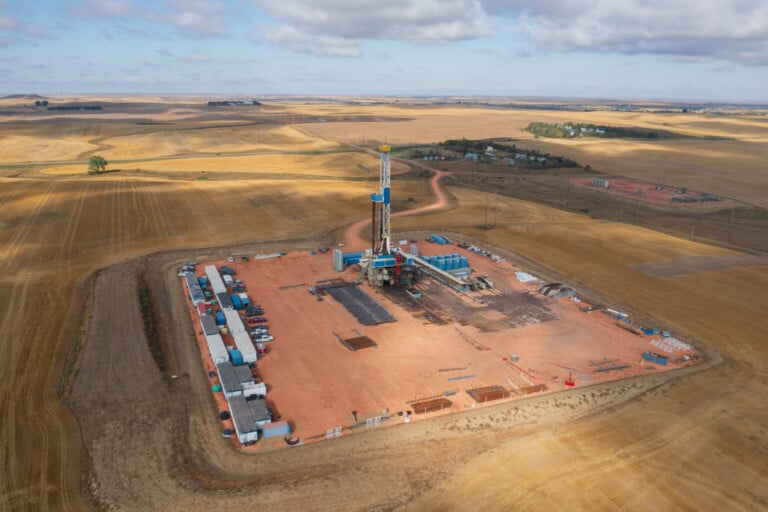
BISMARCK, N.D. (North Dakota Monitor) — North Dakota’s top oil regulator is pessimistic about oil prices for 2026 but says oil production should hold steady, due in part to new drilling technology companies are using to remain profitable.
“Every time somebody thinks that the industry is essentially kind of maxed out on their technical capabilities, they usually come through with some type of innovation,” said Nathan Anderson, director of the North Dakota Department of Mineral Resources.
North Dakota produced nearly 1.17 million barrels of oil per day in October, the most recent figure available. The market price of North Dakota crude oil averaged about $53 that month, close to the bare minimum producers need to make a profit and a drop of $14 per barrel since January.
“Operators generally have shut down or slowed down activity in the past at those levels,” Anderson said. “What we’re seeing now is these activity levels are continuing to maintain where they’re at in spite of that.”
North Dakota, the No. 3 oil producer in the nation, relies on oil and gas tax revenue for much of the state budget. The state maintains a revenue forecast to track that, based on oil production and fluctuations in prices. Oil production is nearly 2% above the state’s revenue forecast for the 2025-27 budget cycle, while the price was nearly 10% below forecast in October.

Nathan Anderson, director of the Department of Mineral Resources, presents the latest oil and gas production numbers on Dec. 19, 2025. At right is Justin Kringstad, director of the North Dakota Pipeline Authority. (Photo by Jacob Orledge/North Dakota Monitor)
There are 27 drilling rigs active in North Dakota, compared to 37 a year ago at this time. The number of hydraulic fracturing crews dipped from 13 to seven in recent weeks, which Anderson said is partially due to budget constraints at the end of a calendar year. He expects activity will pick up in January.
“Some of them are actually increasing activity,” Anderson said. “Each company has a slightly different business model on how they operate.”
One reason North Dakota oil production is stable, despite the dip in oil activity, is companies are drilling longer horizontal wells. Oil wells drilled in the Bakken typically drill vertically until they hit the Bakken rock formation about 2 miles underground, then curve horizontally for 2 miles. The surrounding rock is then fractured, or fracked, to release the oil.
But companies are now drilling farther horizontally. More than 1,000 permits have been issued for wells that are drilled horizontally for 3 miles instead of 2. That accounts for 30% of all wells being completed, according to Department of Mineral Resources data.
Some companies took it a step further in 2024 and began drilling horizontally for 4 miles. There have been 105 permits awarded for wells of that length, a fifth of which have been drilled and completed.
These longer wells have made it economically feasible to drill in areas outside of the Bakken core, where wells are typically most productive. That has prompted more activity in areas like Divide County, Burke County and southern McKenzie County, Joel Brown, mineral services manager at Mineral Tracker, a subsidiary of First International Bank and Trust, said during a presentation this month.
Brown collected production data for wells in a portion of northern Mountrail County, one of those less productive regions, and shared his findings with the Board of University and School Lands. The typical Bakken wells produced 200,000 barrels of oil within an average of 46 months, and the 3-mile wells hit that mark in 22 months.
The one well he analyzed that drilled for 4 miles horizontally in the area reached the milestone in eight months, Brown said.
The 200,000-barrel milestone is approximately when a well will “pay off,” said Gov. Kelly Armstrong, chair of the five-member board. If a company can recoup its investment quicker, then it can re-allocate those funds to a second well location, he said.
“Cash flow is their problem,” Armstrong said. “If they can pay off a well in eight months, they can drill more wells.”
The increased value offered by longer wells was evident this fall when the state held its highest-grossing auction of oil and gas rights in 14 years. The Department of Trust Lands, which manages state-owned minerals held in trust for the public, holds two lease sales a year. The October 2025 auction involved 64,000 acres and collected $49.5 million for the state.
“That acreage is now way more valuable than they previously thought in the past,” said Chris Suelzle, director of minerals management for the Department of Trust Lands. “You’re getting more out of a 3- or 4-mile lateral in your rate of return because you just don’t have to spend as much money.”
Those cost efficiencies will be particularly important while oil prices remain low. Anderson told lawmakers earlier in December he is pessimistic that oil prices will recover any time soon due to a combination of factors, including global oversupply.
That oversupply is the primary factor contributing to the U.S. Energy Information Administration’s price outlook for 2026. The agency’s data projects the price of West Texas Intermediate crude oil to remain in the low $50s per barrel for all of 2026.
“It just doesn’t lend itself to me being bullish on oil prices in 2026,” Anderson said on Dec. 19. “I’m bearish probably for the next 12 months.”
The price of North Dakota oil will be slightly lower. North Dakota oil production is sold at a slight discount relative to West Texas Intermediate, factoring in the cost of transportation and refinery demand. The average discount in December was $6.61 per barrel according to North Dakota Pipeline Authority data.
North Dakota Monitor reporter Jacob Orledge can be reached at jorledge@northdakotamonitor.com.