Judge weighs contempt against top Department of Justice official in Minnesota over ICE orders
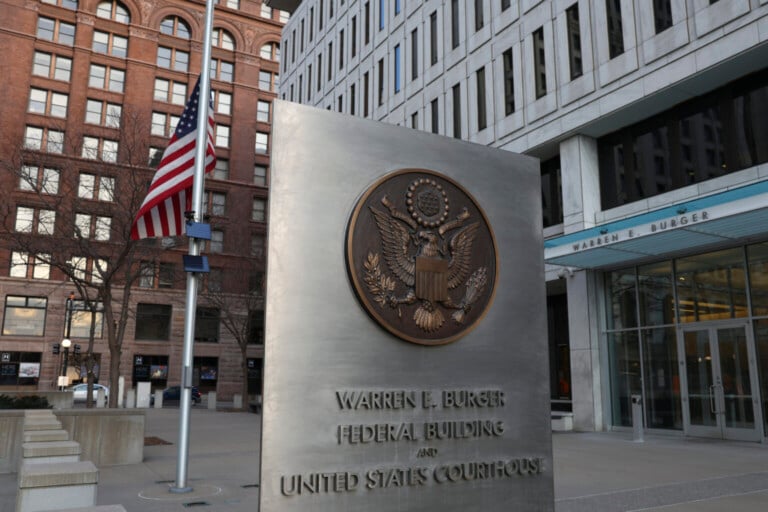
ST. PAUL, Minn. (Minnesota Reformer) — U.S. District Court Judge Jeffrey Bryan is weighing sanctions against the top Department of Justice official in Minnesota, U.S. Attorney Daniel Rosen, for the federal government’s failure to promptly return the belongings of illegally detained immigrants and comply with other court orders in more than two dozen cases.
A contempt judgement against Rosen would mark a major escalation in the ongoing feud between the Trump administration and federal judges over the warrantless arrest of hundreds of immigrants in Minnesota during Operation Metro Surge.
Bryan summoned Rosen to his courtroom in St. Paul on Tuesday along with Assistant U.S. Attorney David Fuller and a representative of Immigration and Customs Enforcement to explain why they should not be held in contempt for violating court orders to return the property of 28 people released from ICE detention and provide documentation to the court showing they had done so.
“This is an extraordinary hearing to have to do,” Bryan said, adding he hadn’t ruled out criminal contempt.
Indeed, Rosen said it was the first time in the three decades he’s been practicing law to be called to a “show cause” hearing to defend himself from being held in contempt.
Yet federal judges have been regularly threatening to hold Trump administration officials in contempt for violating their orders regarding immigrants illegally detained by ICE.
Attorneys in the 28 cases filled three rows of benches in the courtroom, all representing clients who had been released from detention without all their belongings, including cash, cellphones, jewelry, driver’s licenses, work permits, passports, clothing and other immigration documents.
In one case, a person was still missing his shoes. In another, a shoelace.
Since Bryan issued his order on Feb. 26 summoning Rosen to court, the Department of Justice and ICE located and returned — sometimes via tracked UPS packages — much of the missing property.
In two cases, however, ICE determined it had lost the items and searching anymore would be “futile.”
Rosen argued that losing people’s belongings did not amount to contempt.
“There is no contempt of court, there was no defiance, no disobedience,” Rosen said.
In one case, Rosen said federal agents mistakenly stapled the wrong inventory document to the bag containing the man’s possessions, leading to a mixup — albeit in a “very timely way,” Rosen noted.
The agency could not find the bag containing the man’s belongings including his cell phone, AirPods, car keys, work permit, wallet with bank cards, and boots.
“They looked and they looked and they looked some more. They turned things upside down. They searched everywhere … it was lost,” Rosen told the judge.
In another case, ICE lost a woman’s Minnesota ID, work permit and Social Security card.
Tauria Rich, ICE’s deputy field office director in St. Paul, couldn’t say where the items were misplaced, whether in Minnesota or Texas, where the woman was sent before a judge ruled her detention was illegal and ordered she be returned to Minnesota and released. Rich couldn’t even say exactly which documents were missing.
She did say now that the items were determined to be lost, the government would start the process of reimbursing people for those possessions.
The woman’s attorney, Mackenzie Moy, said the incident showed a “serious lack of good faith effort” that ICE didn’t bring anyone who could say how the agency might have lost the items and what they did to try to locate them.
“I felt like they wasted our time,” Moy said after the hearing. “While they told us repeatedly that they cared so much, they couldn’t bother to bring someone who knew anything.”
Releasing people without their belongings has been a common practice throughout Operation Metro Surge, the incursion of some 3,000 federal agents to Minnesota in what the Department of Homeland Security called its largest operation ever.
Volunteers created a group called Haven Watch with the sole purpose of meeting people as they’re released from the Bishop Henry Whipple Federal Building to give them warm clothes, a temporary cell phone and a ride home.
The lost items underscore the disorder of Operation Metro Surge, as federal agents raced to meet the Trump administration’s voracious appetite for mass deportations.
Rich, the ICE official, has told more than one federal judge that the volume of detainees has made it hard to locate people’s possessions. It’s an explanation that’s found little sympathy with judges, who have themselves been inundated with cases from immigrants challenging their detention.
Bryan distributed copies of ICE’s detention policies and walked through how the agency handles detainees’ property and lost possessions, asking Rich if she had personal knowledge of whether the policy was followed in each of the cases.
Rich said no, because it was not generally in the scope of her duties. That appeared to disturb Bryan, who in his order, demanded the appearance of ICE officials with direct knowledge of the 28 cases.
She also said that the Whipple building is not a “detention facility” subject to those ICE policies but is rather a “holding room.” Bryan asked that she provide the court with the ethics and policies regarding Whipple by Thursday.
At the end of Tuesday’s hearing, which stretched from 10 a.m. until after 5 p.m., Bryan said he would take the issue of contempt under advisement and issue a decision soon.
He said a contempt decision would be a “historic low point” and yet, judges are saying it’s the only way to ensure the federal government follows their orders.
U.S. District Judge Laura Provinzino imposed a $500 fine on Special Assistant U.S. Attorney Matthew Isihara for each day the government did not return the identification documents of an immigrant arrested in Minnesota but released in Texas. The government swiftly returned the man’s documents and no fines were imposed on the attorney.
Last week, U.S. Chief District Court Judge Patrick Schiltz threatened to hold federal officials in criminal contempt, which could include jail time, if judges’ orders continue to be violated.
“This Court will continue to do whatever is required to protect the rule of law, including, if necessary, moving to the use of criminal contempt. One way or another, ICE will comply with this Court’s orders,” Schiltz, a George W. Bush appointee, wrote in the conclusion of the order.
Schiltz’s order tallied 210 violations of court orders across 143 cases during Operation Metro Surge.