North Dakota wants judge to void its $28M win in pipeline protest case in favor of fed settlement
BISMARCK, N.D. (North Dakota Monitor) — Attorneys for North Dakota and the United States have asked a judge to toss a nearly $28 million judgment against the federal government related to the Dakota Access Pipeline protests so the parties can pursue a settlement instead.
In exchange, North Dakota would receive a “substantial monetary payment” from the United States and the federal government would drop its pending appeal, according to court records filed late last month.
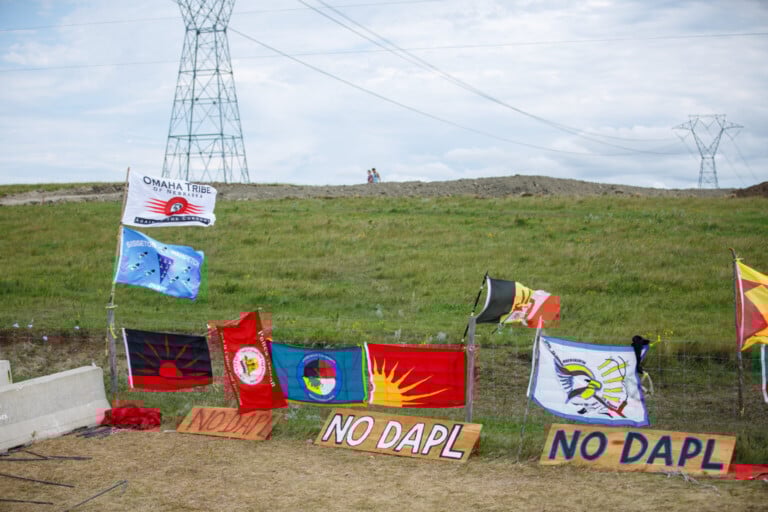
The lawsuit, filed in 2019, concerns demonstrations against construction of the crude oil pipeline, also known as DAPL, that took place in rural south-central North Dakota in 2016 and 2017.
North Dakota in the suit alleges that the federal government caused the protests to grow in size and intensity by unlawfully allowing demonstrators to use U.S. Army Corps of Engineers land. The state was then forced to pay millions of dollars to police and clean up the demonstrations, North Dakota claims. The United States denies the state’s allegations.
North Dakota U.S. District Court Judge Daniel Traynor in April 2025 sided with the state and ordered the executive branch to pay North Dakota the $28 million sum, a decision the U.S. Department of Justice appealed in June.
Later that summer, the state and federal government told the 8th Circuit Court of Appeals they had entered settlement negotiations and wanted to pause the case.
The parties have now agreed on a potential settlement, according to documents filed in February. The records don’t state how much money North Dakota would receive if the agreement is made official.
As part of the settlement, the parties have asked Traynor to axe the $28 million judgment and to nullify three other orders in which he ruled against the United States. That includes his nearly 120-page opinion from April 2025.
The state and federal government noted in the request that the judge does not have to rescind the rulings just because both parties both want him to. Judges must weigh the interests of the parties against the interests of the public and the courts, the records state.
Attorneys for North Dakota in the filing acknowledged the legal conclusions Traynor made in those orders “could have utility holding the federal government to account” in the future, which could be undermined if the rulings are nullified. But the state believes the time and money saved by avoiding further litigation — as well as avoiding the risk of getting the judgment against the U.S. overturned upon appeal — is worth the trade-off, according to court records.
Attorneys for the U.S. Department of Justice wrote in the request that while the executive branch “respectfully disagrees” with Traynor’s decision, it “believes that the public interest would best be served by bringing this matter to a swift close without further proceedings.”
Attorney General Drew Wrigley in a Thursday statement said he could not provide further details about the tentative agreement.
The 8th Circuit would have to first send the case back to Traynor before he could grant the parties’ requests.
The case went to trial in Bismarck in early 2024. During the four-week trial, the court heard from witnesses including former governors Doug Burgum and Jack Dalrymple, Native activists, federal officials and law enforcement.
The Dakota Access Pipeline carries crude oil from northwest North Dakota to Illinois. It crosses the Missouri River just north of the Standing Rock Sioux Reservation, which prompted the tribe to begin protesting the pipeline in 2016 and 2017 on the grounds that it poses a threat to its water supply and sovereignty.
North Dakota’s lawsuit originally requested $38 million in damages from the federal government. Traynor ordered the executive branch to pay $28 million since the U.S. Department of Justice previously gave the state $10 million as compensation for the protests.
Reach North Dakota Monitor reporter Mary Steurer at msteurer@northdakotamonitor.com