Minnesota Legislature closes session marked by partisan division and election year politics
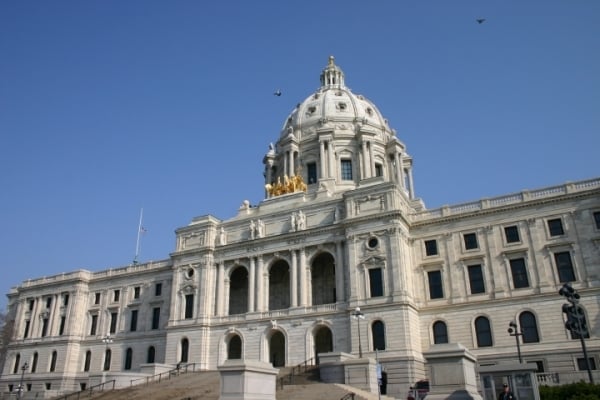
ST. PAUL, Minn. (Minnesota Reformer) – The Minnesota Legislature adjourned the 2026 session late Sunday with a modicum of accomplishments that’s still likely to leave advocates, lobbyists and some lawmakers wanting.
Lawmakers have been contending all session with election year politics, a lame duck governor, a 67-67 deadlocked state House, and the simple fact that they crafted a two-year budget last year — eroding any sense of urgency this year.
Despite the impasse, legislative leaders and Gov. Tim Walz agreed to bail out Hennepin County Medical Center with an immediate $205 million cash infusion and $500 million available in a reserve account — for which only HCMC would qualify — to tap beginning next year.
Lawmakers also created a task force to analyze the hospital’s finances and are implementing a new governing structure. The HCMC funding bill dissolves the county’s hospital board by 2027 and reinstates a professional, corporate board comprising members with expertise in hospital administration.
Legislators also reached a deal to pass a $1.2 billion public works package, with $420 million of that allocated to water treatment projects across the state. Among the other projects: $40 million for St. Paul’s Roy Wilkins Auditorium renovations and another $10 million for what’s being called Arena at Rivercenter Complex, i.e., Rivercenter and Grand Casino Arena. Lawmakers approved $10 million for the Mahnomen Hospital on the White Earth Reservation.
The infrastructure package required a three-fifths supermajority for passage because it’s paid for with borrowed money. Republicans used their leverage to win a one-year reduction in the state’s vehicle registration fees, also known as tab fees, as part of an agreement to deliver votes on the infrastructure bill. Lawmakers also extended the state’s homestead credit, which will increase property tax refunds for many Minnesotans.
GOP House Speaker Lisa Demuth, R-Cold Spring, touted the tab fee cuts and property tax refunds as examples of Republicans focusing on making life more affordable for Minnesotans.
Demuth said Republicans fought “to protect our tax dollars from fraud, to make this place more affordable, to invest in our infrastructure, and then to protect our kids.”
Demuth is a leading candidate for the Republican nomination for governor, and any sign of capitulation to Democrats — through bipartisan agreements — threatened to be disqualifying among the fiercely partisan GOP delegates who will meet later this month for the state GOP convention.
After the session adjourned sine die, Demuth said Minnesotans want a leader who can do bipartisan work.
“We have to come to a place in our state and our country where Democrats and Republicans can have civil conversations. The tie allowed us to do that, and it also forced us to do it to prove that it could be done,” Demuth said.
House Democratic-Farmer-Labor Party leader Zack Stephenson, DFL-Coon Rapids, said House Republicans blocked gun control bills and Operation Metro Surge relief, and Democrats will remind voters of that in November.
“I think the contrast couldn’t be clearer for Minnesotans about who is trying to lower their costs, who is fighting to keep them safe and who is fighting for their civil liberties, and that’s a message that we will proudly take to Minnesotans this fall,” Stephenson said.
A deadlocked House to the bitter end
The thwarted ambitions of the session were illustrated during an exchange early Sunday evening, when House floor leader Jamie Long, DFL-Minneapolis, asked Demuth whether she had prevented the House from voting on items important to the DFL. She said the packages “were still being reviewed.”
Long then continued, this time bringing up the session’s most contentious issues: “Can you confirm that the reason we were unable to vote on the comprehensive gun violence prevention package and the comprehensive response to Operation Metro Surge is that you have held the bills and not released them?”
“That is not true,” Demuth replied. When Long asked her why it was not true, Demuth did not answer.
GOP House floor leader Harry Niska, R-Ramsey, intervened and made a motion to recess.
Republicans’ hopes for big tax cuts were similarly stymied.
A focus on Capitol safety after Hortman killing
The Legislature in 2025 passed a $66 billion biennium budget. Days later, Rep. Melissa Hortman and her husband were shot and killed. Sen. John Hoffman, DFL-Champlin, and his wife Yvette were shot multiple times and seriously wounded by the same gunman, prosecutors say.
Officials have since reckoned with their own safety, and Walz signed an executive order implementing weapons screenings at all Capitol entrances. Lawmakers on Saturday passed a Capitol security package that keeps in place the screenings and creates a new unit under the State Patrol that will investigate threats against elected officials.
Democrats hold a one-seat majority in the Minnesota Senate, and throughout the 2026 session they passed bills to regulate federal immigration agents after Operation Metro Surge, provide financial assistance to people and businesses impacted by the immigration enforcement surge, and ban so-called assault weapons and large capacity magazines used in the Annunciation Catholic Church shooting.
These bills made no progress in the Minnesota House, where Republicans and Democrats were deadlocked.
Senate Majority Leader Erin Murphy, DFL-St. Paul, released a statement Sunday applauding the Legislature’s work: putting HCMC on firmer financial ground and passing the infrastructure bill and anti-fraud measures.
Senate Minority Leader Mark Johnson, R-East Grand Forks, said in a statement that the GOP caucus had achieved key goals: “We fought for and achieved a quarter-billion-dollar tax cut on vehicle tab fees, strong fraud prevention reforms to protect taxpayer dollars, and responsible infrastructure investments.”
Murphy lamented what was left undone, however: “I am deeply disappointed — and Minnesotans will be too — at what is getting left behind tonight, what was blocked by people who put the interests of special interests or their president ahead of Minnesotans. That list is long,” she said, before listing a litany of legislation that died, including gun control and a response to Operation Metro Surge.
Democrats held a 36-hour sit-in on the House floor that ended Saturday, demanding Demuth bring up the gun control package. Sen. Zaynab Mohamed, DFL-Minneapolis, whose district is home to Annunciation, said accountability for House Republicans’ inaction will come in November.
“That is a warning to (Demuth) and the Republicans in Minnesota. We will win the majority and we will ban assault weapons and high-capacity magazines out of our communities come next year,” Mohamed said.
Hundreds of gun control advocates protested at the Capitol, including Demuth’s adult daughter.
Shelisa Demuth told WCCO she was there hoping that her mother would bring the gun control package up for a vote, but understood hopes for passage were limited because it could not clear committees, all deadlocked between the two parties.
“My mom prides herself on being fair, and that might mean that it does have to wait ‘till next session,” Shelisa Demuth said. As the Star Tribune recently reported, Demuth’s four children were on the campus of Rocori schools during a shooting at the high school in her home community of Cold Spring in 2003.
Other key hospital bill died
Other than assistance for HCMC, Minnesota hospitals implored lawmakers this session to strengthen and extend an obscure provision known as 340B, which lets hospitals that treat low-income patients buy drugs at a discount and keep the savings.
Pharmaceutical companies lobbied to kill the legislation, which would give the Attorney General’s Office the authority to sue drug companies that fail to follow the requirements of the law, which is what hospitals and lawmakers allege. It would also have extended the program, which will sunset next year.
Big Pharma appears to have won the battle this year, as lawmakers failed to pass any provision related to 340B.
Legislature takes aim at fraud
The Legislature also debated measures to prevent fraud in Minnesota’s state-run social services. Walz already signed a bill creating an Office of Inspector General to oversee public dollars and prevent fraud.
Legislation to bolster the Attorney General’s Medicaid Fraud Unit and add more staff to investigate fraud passed both chambers. Another measure seeks to modernize county IT systems. Walz is expected to sign both.
Lawmakers passed a tax bill that includes a provision to impose a 100% tax on a person or business convicted of fraud in an effort to claw money back from convicted fraudsters.
Help for renters, homeowners
Although Democrats criticized Republican inaction on a response to the immigration crackdown, the Legislature passed $40 million for a longstanding housing assistance program to help Minnesotans who are struggling to pay their rent or mortgage. Walz’s office and Stephenson touted the program as assistance for immigrants and other people who were hurt by Operation Metro Surge.
Rep. Mike Howard, DFL-Richfield and a co-chief author of housing legislation, said that the funding is not specifically intended to assist people impacted by the recent immigration enforcement operation, however, and denied any effort to sneak Operation Metro Surge relief into a bipartisan bill.
By Michelle Griffith