Board approves $1.3 million in state investment employee bonuses
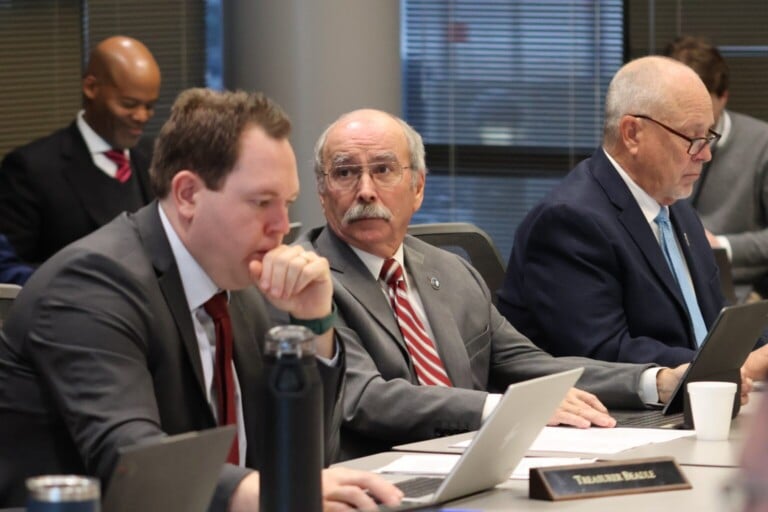
BISMARCK, N.D. (North Dakota Monitor) — The State Investment Board on Friday approved about $1.3 million in performance bonuses to 12 Retirement and Investment Office staff members.
Two state lawmakers had called on the board to delay the vote, citing unanswered questions about whether the bonuses comply with state law.
Gov. Kelly Armstrong, who chairs the State Investment Board, on Friday urged the bonuses to move forward, noting an assistant attorney general and legal staff within his office said the payments are legal.
Armstrong said that while he has problems with the structure of the bonus pay program, he doesn’t want to abruptly take back money that was promised to the agency.
“In North Dakota, when we make a deal, we honor it,” he said.
The program, established in 2024, is intended to reward Retirement and Investment Office staff when its internally managed funds outperform the market.
Sen. Sean Cleary, R-Bismarck, and Rep. Mitch Ostlie, R-Jamestown, in letters to the board this week, said the bonuses were based on the performance of funds mostly managed by outside firms on the Retirement and Investment Office’s behalf. They said this appeared to conflict with the statute’s mandate for the additional pay to only be granted if money directly invested by the state agency surpasses revenue benchmarks.
The law doesn’t specify what qualifies as internally managed funding. Armstrong said that while the language of the statute is “opaque,” testimony on the proposal from the 2023 Legislature indicates that the bill’s authors never intended for the program to award bonuses exclusively based on funds managed by Retirement and Investment Office staff.
The bonuses were approved almost unanimously. Board member Adam Miller was the only no vote.
Seven of the 12 bonuses exceed $100,000 and the largest is $293,000.
The Retirement and Investment Office still has a hand in overseeing money managed by third-party firms, executive director Jodi Smith said during the meeting.
The incentive pay is awarded if the state’s top four funds outperform the market. Those four funds are the Legacy Fund, the Public Employees Retirement System, the Teachers Fund for Retirement and Workforce Safety and Insurance.
Those funds surpassed benchmarks by $191 million between July 1, 2024, and June 30, 2025.
State data indicates only a fraction of the four funds was invested by in-house employees during the period of time the bonuses cover, Cleary wrote in his letter.
Smith said during the meeting that even if the agency were to follow Cleary and Ostlie’s narrow interpretation of the statute, the Retirement and Investment Office’s investments still did well enough to merit the bonuses.
“It doesn’t matter how you do the math,” she said. “Our team succeeded.”
Cleary and Ostlie have also raised concerns that the board lacks continuing authority to appropriate the bonus money. The lawmakers have asked for an attorney general’s opinion on the matter.
Armstrong said that the executive branch has already had internal discussions about changing the bonus pay program in the future.
He said that even though one of the goals of the program was to attract and retain Retirement and Investment Office staff, it hasn’t been effective in reducing turnover.
“Since December of 2024 this agency, had turnover in 11 of 32 positions,” he said. “We have to address base pay to be more competitive with other public funds across the country.”
North Dakota Monitor reporter Mary Steurer can be reached at msteurer@northdakotamonitor.com.