North Dakota officials say data center concerns fueled by misinformation
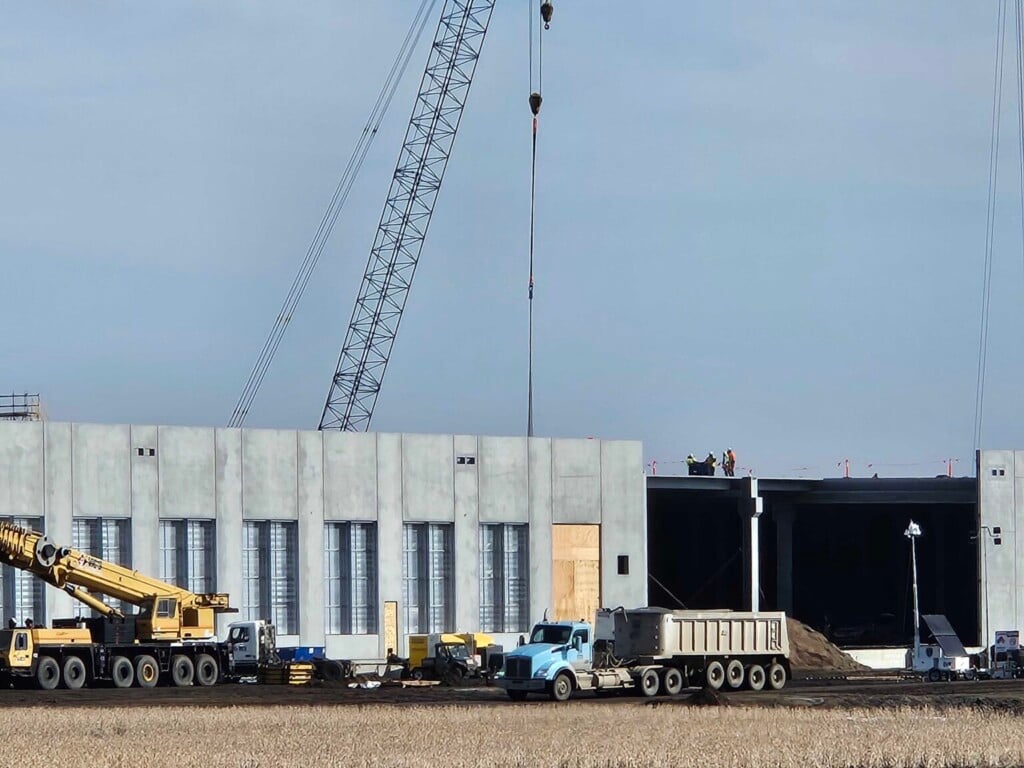
BISMARCK, N.D. (North Dakota Monitor) – The drumbeat of support for data centers is growing louder in North Dakota state government, even as a rising tide of opposition and concerns about the facilities plays out at the local level.
Local opponents of data center projects have cited a wide ranging list of concerns. These have included noise and light pollution in rural areas, disruptions to wildlife and hunting, water use and health concerns. The concerns aren’t limited to the communities hosting the facilities either as some worry the data centers’ demand for power will drive up residential electric rates as well.
Many government officials are attributing the rising discontent to misinformation.
“People don’t necessarily want to hear the facts, and I think that’s a big frustration for us,” said James Semerad, director of the air quality division of the Department of Environmental Quality. “If they want to say two and two is five, and it’s said often enough, it seems like people believe two and two is five.”
Semerad’s remarks were made during Tuesday’s meeting of the interim legislative Energy Development and Transmission Committee in Grand Forks. Several legislators expressed concern local officials are making decisions with incomplete information and are relying on emotion, rather than facts.
Rep. Mike Brandenburg, R-Edgeley, said his local county commissioners want to “do the right thing” and have done a great job, but some township supervisors are “reacting with emotion.”
“Not all of them, but there’s some of them that way, and that’s a problem that I’m seeing,” Brandenburg said.
Rep. Dick Anderson, R-Willow City, said the state needs to be more “proactive” in educating local officials on the issue.
Claire Vigesaa, executive director of the North Dakota Transmission Authority, said those officials often lack the tools to evaluate projects that could have a multi-million dollar and multi-generational impact on their communities, like data centers.
“Many of these smaller communities have seen decreased business activity over the years, so growth or large industry activity is a quantum shift for them in their process,” Vigesaa said. “North Dakotans want to do what’s best for their communities, but don’t have the tools or information readily available to help them make their decisions.”
One presenter on Tuesday suggested legislators compile information on what other states’ policies on permitting, zoning and regulation of data centers are and cautioned against dismissing real concerns from rational people.
“There is a legitimate question on why there is such a rush going on to get data centers built,” said Ladd Erickson, state’s attorney in McLean County.
Rep. Anna Novak, R-Hazen, and chair of the interim committee, pushed back on the perception there are no existing rules for data centers in North Dakota.
“There’s somewhat the perception that it’s sort of the wild wild west out there,” Novak said. “And that’s not entirely accurate at all.”
Multiple regulators informed legislators they have few concerns about data centers’ water use and impact on air quality. Semerad said data centers typically do not have any emissions that impact air quality unless they have to turn to diesel generators for emergency power instead of the electric grid.
“If the grid is available, then air quality issues will be very manageable,” Semerad said.
Reice Haase, director of the Department of Water Resources, said North Dakota only utilizes a small portion of the available water resources and can accommodate the water needs of data centers that could be located in the state. He said most of the proposed facilities use closed-loop cooling systems that significantly reduce any ongoing water consumption.
“You can view a closed loop system very similarly to how your radiator works in your automobile. It needs a little bit of water to charge it up initially, but you’re not really adding a lot of water back into that very often,” Haase said. “For the most part, it’s very efficient.”
Erickson emphasized the need for zoning and permitting powers for data centers to remain at the local level. But he said counties don’t have the capability to manage the bonding and preparation for eventual reclamation of the data center sites.
“The state would have more flexibility to create a proper reclamation project,” Erickson said, suggesting the state pass legislation to authorize an agency to create administrative rules for a bonding process at the state level.
He said there is a real need to prepare for the eventuality that advances in computing technology will render data centers less valuable in the future.
“Right now, that’s not a realistic concern, but we don’t know down the road as computer power doubles every five years, and companies consolidate,” Erickson said. “Once the large language models get trained with the millions of data points, is that going to still mean there’s going to be as much demand?”
Novak directed Legislative Council to put together a memo of how other states are approaching the permitting of data centers, as well as to coordinate with the interim Tax Reform and Relief Advisory Committee on their study of existing tax exemptions, in advance of the committee’s next meeting.
Other government officials have also stepped up the messaging in recent weeks that opposition to data centers is being fueled by misinformation, including Secretary of the Interior Doug Burgum, North Dakota’s former governor, during a visit to Bismarck in May, and Gov. Kelly Armstrong.
“Misinformation can spread so fast, and people get very, very emotional about it,” Armstrong said in an interview after Burgum’s speech. “We want to base our decisions based on facts and not emotion.”