North Dakota Supreme Court weighs potential statewide vote on term limits change
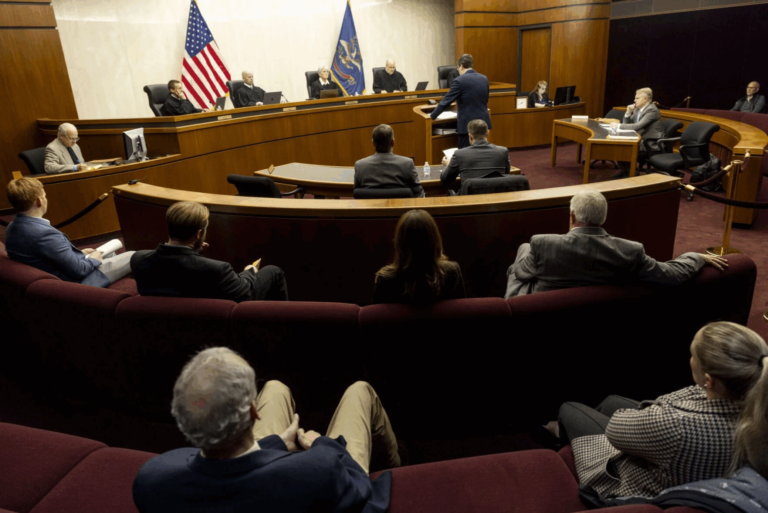
BISMARCK, N.D. (North Dakota Monitor) — The North Dakota Supreme Court heard arguments Thursday over whether proposed changes to voter-approved legislative term limits voters should go to voters in November.
Lawmakers in 2025 adopted the proposal, Senate Resolution 4008, to give lawmakers more freedom over how they spend their terms.
The resolution refers a constitutional amendment to the 2026 general election ballot. If voters approve it, the amendment would alter the legislative term limits created in 2022 that bar state lawmakers from serving more than eight years in the House and eight years in the Senate.
But two backers of the term limits amendment, Article XV, say Senate Resolution 4008 shouldn’t be put before voters.
Former Minot Republican lawmaker Oley Larsen and Grand Forks County Commissioner Terry Bjerke filed suit over the proposal earlier this year, claiming the Legislature isn’t allowed to forward the amendment to the public.
They have asked the Supreme Court to declare the measure void and direct the Secretary of State’s Office not to put it on the ballot.
During Thursday’s hearing, Southeast Judicial District Court Judge Cherie Clark sat in for Justice Mark Friese, who recused.
One reason Larsen and Bjerke claim the measure is unlawful is due to a clause in Article XV that bars the Legislature from altering term limits through a constitutional amendment.
“The Legislative Assembly has done exactly what they’re prohibited from doing,” Zachary Wallen, an attorney representing the plaintiffs, said during Thursday’s hearing.

North Dakota Legislature attorney Brian Schmidt argues before the state Supreme Court on April 2, 2026. (Pool photo by Tanner Ecker/Bismarck Tribune)
Attorney Brian Schmidt, representing the Legislature, said Senate Resolution 4008 contains a provision repealing that clause and therefore would not violate Article XV.
The Legislature wants the Supreme Court to dismiss the case.
The measure has no effect unless the public approves it, so the high court has no legal issue to rule on, Schmidt said.
He said voters should be allowed to decide for themselves whether they want to adopt the resolution.
“The people haven’t spoken yet,” Schmidt said Thursday.
“But the public did speak on this,” Justice Jon Jensen replied, referring to voters’ decision to approve Article XV four years ago.
Wallen also argued the proposed measure violates Article III of the constitution, which holds that a two-thirds majority by each legislative chamber is required to alter or repeal constitutional amendments within seven years of their effective dates. Senate Resolution 4008 passed the Senate by a narrow 24-23 vote and the House by 53-39, the plaintiffs note.
Schmidt said that referring a constitutional amendment to voters is not the same thing as directly amending the constitution, so Senate Resolution 4008 does not violate this part of the constitution.
He said the constitution clearly gives lawmakers the ability to propose amendments. Under Article IV, the House and Senate only need a simple majority to put constitutional measures on the election ballot.

Attorney Zachary Wallen, right, jots down notes for a rebuttal during a North Dakota Supreme Court hearing dealing with a term limits ballot measure on April 2, 2026. (Pool photo by Tanner Ecker/Bismarck Tribune)
In addition to dismissing the case or striking down Resolution 4008, the court could also decide to invalidate only part of the proposal and let some parts proceed to the ballot, justices indicated Thursday.
The North Dakota Secretary of State’s Office has said it is not the role of the agency to analyze the constitutionality of proposed amendments, so it does not have a position on Resolution 4008. It did not participate in Thursday’s hearing.
The proposed amendment would change term limits to allow lawmakers to serve up to 16 years in either chamber. It would also make it so partial terms don’t count against term limits.
Both Bjerke and Larsen, who did not attend the hearing, were members of the sponsoring committee to put the 2022 term limits amendment on the ballot, according to the lawsuit. The ballot measure passed with 63% approval from voters.
A national nonprofit group called U.S. Term Limits backed North Dakota’s term limits amendment.
Wallen said U.S. Term Limits supports Larsen and Bjerke’s lawsuit. When asked whether the organization was providing the plaintiffs financial support, Wallen declined to comment.
North Dakota Monitor reporter Mary Steurer can be reached at msteurer@northdakotamonitor.com.