Public Service Commission candidates weigh in on prospect of carbon pipelines
BISMARCK, N.D. (North Dakota Monitor) — Carbon pipelines could aid a new era of North Dakota oil production, but challengers running for seats on the agency that permits pipelines argue there are flaws in the process.
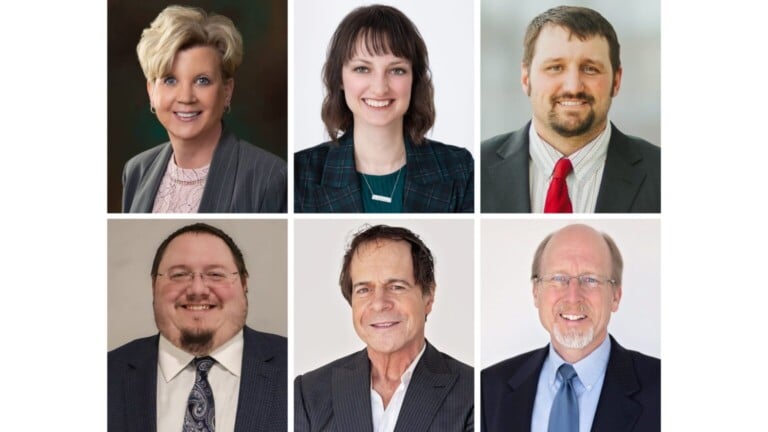
There are two seats on the three-person Public Service Commission up for election in 2026. One is held by Sheri Haugen-Hoffart seeking another full six-year term. The other is held by Jill Kringstad. She was appointed by Gov. Kelly Armstrong to fill the seat once occupied by U.S. Rep. Julie Fedorchak, who resigned when she was elected to Congress. The winner will have the seat for two years, with the office back on the ballot again in 2028.
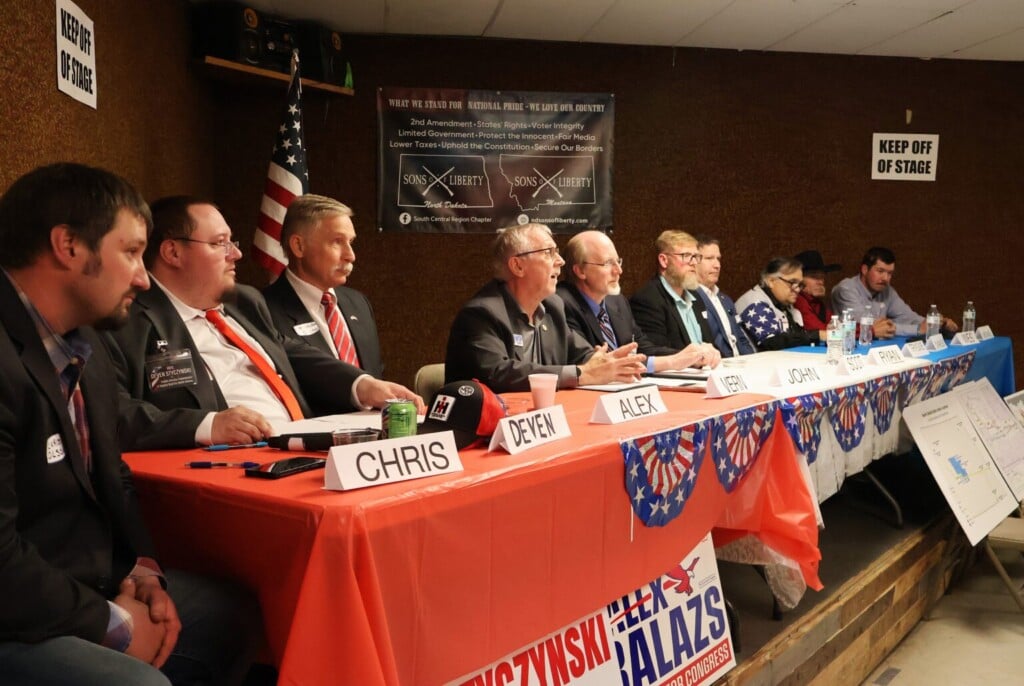
Haugen-Hoffart and Kringstad both have opponents in the June Republican primary. Haugen-Hoffart is being challenged by Deven Styczynski and Kringstad by Chris Olson, who said he was inspired to run by his experience with a carbon pipeline developer. The winners of the primary will face the two Democratic-NPL Party candidates, John Pederson for the six-year term and Scot Kelsh for the two-year term.
Haugen-Hoffart and Kringstad both point to enhanced oil recovery as a potential benefit of carbon pipelines. The technology pumps a gas such as carbon dioxide into an oil reservoir to make wells more productive.
One carbon pipeline has been shipping CO2 from North Dakota to an oil field in Canada for more than 25 years.
While enhanced oil recovery has been used on convential oil wells, the technology is still being researched for use in shale oil areas such as the Bakken in North Dakota.
Haugen-Hoffart said pipelines are the safest way to transport CO2.
Kringstad said carbon pipelines “are going to have to be built in a way that respects the landowners, the environment, and the end-users.”
The most prominent case has been the five-state Summit Carbon Solutions project with a storage site in North Dakota. But it also has been controversial among landowners.
Haugen-Hoffart voted against the project in 2023 when the PSC rejected Summit’s application.
But the PSC voted to allow Summit to revise its application, and Haugen-Hoffart joined her colleagues in unanimously approving the pipeline in November 2024. Summit’s application specified permanent underground, with no mention of enhanced oil recovery, though company officials have stated that could be possible.
Kringstad was not on the PSC for those votes but was working on the agency’s staff. Kringstad said she did not hear all of the testimony on the project and declined to speculate on how she would have voted.
Haugen-Hoffart limited her answers on carbon pipelines, citing pending litigation against the PSC and Summit.
In hearings leading up to the decisions, commissioners heard from residents who had safety concerns and felt mistreated by Summit representatives.
Olson is one with firsthand experience with Iowa-based Summit.
“I didn’t care for how that company was treating the public,” Olson said. “That wasn’t taken into account by PSC.”
Summit eventually rerouted the pipeline away from Olson’s property north of Bismarck, but the experience is what spurred Olson’s run for office.
He said he doesn’t believe carbon pipeline developers should be able to use eminent domain, a court action that forces landowners to provide right-of-way for projects that provide a public benefit.
“I do not believe that CO2 even comes close to meeting the criteria of a public utility,” Olson said.
Styczynski, who has a background in soil science, said grasslands and the ocean are the best storage areas for carbon, where it can be done naturally.
He said carbon pipelines provide more risk than benefit.
“I don’t believe that the project as it was presented, was properly risk-assessed,” he said of Summit’s proposal.
He said not enough attention was paid to details such as thickness of the pipe, the potential for the pipe to corrode and how deep the pipeline should be buried.
He said the potential public benefit does increase if the CO2 has an industrial use, which is not limited to enhanced oil recovery.
“There’s a lot of uses for CO2, other than just pumping it in the ground,” Styczynski said.
The Democratic challengers, who have no opposition in the primary, expressed more interest in storing carbon dioxide to limit the effects of climate change. But said there are trade-offs with carbon capture.
Pederson said carbon capture and storage, if done properly, can work.
“There needs to be rigorous diligence in the Public Service Commission on a case-by-case basis of what the project is,” Pederson said.
He said the CO2 having an industrial use would have a great economic impact.
“Does that have an excess negative impact on the environment?” he asked, adding that it may vary depending on the project.
Pederson and Kelsh agreed that landowners should not have to deal with the threat of eminent domain.
“It’s not that type of a public good, public benefit,” Kelsh said. “It is going to benefit a certain number of people, but not like a highway everyone can use.”
Kelsh said he appreciated that the Summit project intended to have some benefit for the ethanol plants where the carbon would be captured and for the farmers who supply the plants with corn.
But he said the permitting process bypassed local concerns.
“We’re not going to make everyone happy, but we are going to listen to everybody, and we’re not going to ignore them,” Kelsh said.
Haugen-Hoffart and Kringstad noted that the commission has to work within state law and policy decisions are mostly left to the Legislature.
“We’re not policy makers, we’re policy takers,” Kringstad said.
Meanwhile, the Summit project has shifted its focus from North Dakota to Wyoming as an end point, leaving its future in North Dakota in doubt. Summit has been unable to secure the permits it needs in South Dakota and lawsuits have challenged its storage permits in North Dakota.
Reach North Dakota Monitor deputy editor Jeff Beach at jbeach@northdakotamonitor.com